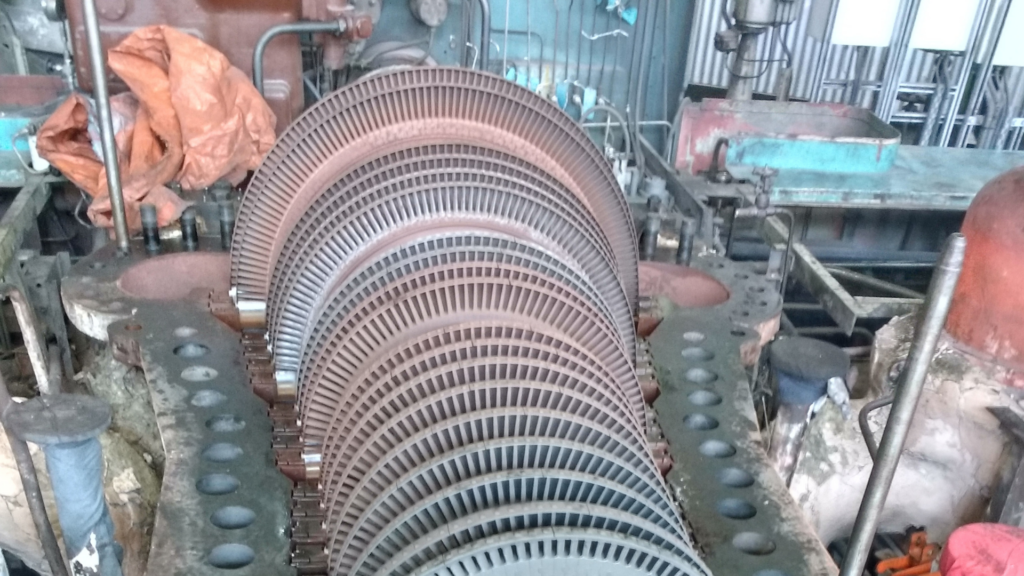
How APP helped unlock production by tracing turbo blower vibration to its source.
A production-critical turbo blower at a US industrial facility, was experiencing high vibration on bearings 3 and 4, including relative shaft vibration and absolute pedestal vibration. The issue had led to a load limitation and was contributing to an estimated 15% drop in production.
The owner needed to understand whether the vibration was being driven by machine condition, operating behavior, bearing performance, pedestal movement, assembly issues, or another mechanical constraint. The priority was to quickly identify the cause, reduce uncertainty about continued operation, and determine which action would allow the load limitation to be lifted safely.
Asset Performance Partners (APP) was engaged to provide specialist turbine support. APP mobilized a turbine specialist to conduct an operational assessment and help the owner move from vibration symptoms to a clear technical finding and practical on-site solution.
THE CHALLENGE
High vibration on rotating equipment can create immediate operational and commercial pressure.
In this case, the issue affected Turbo Blower 12, resulting in a production constraint of approximately 15%. The owner needed to understand why the machine was behaving this way, what risk the condition presented, and what could be done without creating further downtime or unnecessary intervention as this particular Turbo Blower just returned from a major outage.
The vibration involved bearings 3 and 4, with both relative shaft vibration and absolute pedestal vibration reported. That made the assessment more complex, because the issue could not be treated as a simple operating anomaly. It required specialist interpretation of the machine, its support structure, assembly condition and thermal behavior. The owner also needed confidence that any corrective action would address the underlying cause, rather than only suppress the symptom. This particular Turbo Blower needed to be reliable especially after an outage as Turbo Blower 11 was also out of service and Turbo Blower 13, was the only available unit.
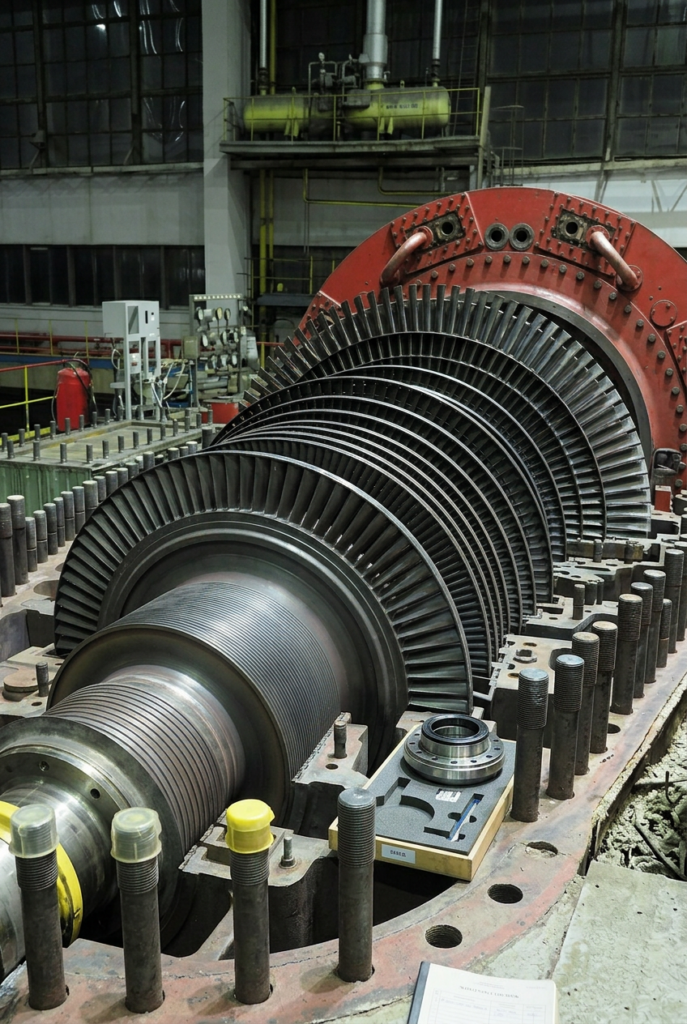

THE APP APPROACH
APP responded quickly by mobilizing a turbine specialist to conduct an operational assessment.
The work focused on understanding the vibration behavior, reviewing relevant machine evidence, and determining whether a mechanical or assembly-related constraint was affecting the blower’s operating condition.
The assessment considered the relationship between vibration, bearing behavior, pedestal movement, and thermal expansion. This was important because high vibration can be caused by several factors, including imbalance, misalignment, bearing condition, structural looseness, foundation issues, or restrictions that prevent normal thermal growth.
APP’s role was to help the owner make a technically sound decision under production pressure. The team provided a detailed analysis and worked toward an effective on-site solution to address the source of the vibration and support the removal of the load limitation.
Specific onsite operational tests were conducted by the team to fully understand the behavior of the vibration through various load conditions. Specific inspections were carried out around the Turbo blower to determine if the blower was free to thermally expand during startup and normal operating conditions as per design intent.
RESULTS AND VALUE DELIVERED
The detailed analysis and on-site solution supported renewed operational confidence and allowed the load limitation to be lifted.
APP’s assessment found that the vibration was caused by a thermal expansion restriction on the bearing 4 pedestal, resulting from incorrect assembly during the most recent outage intervention.
This finding gave the owner a clear technical explanation for the vibration problem. Instead of treating the issue as a general rotating-equipment concern, APP identified a specific mechanical restriction affecting the machine’s ability to operate as intended.
APP’s rapid response gave the owner access to specialist support while the machine was still under an active production constraint. The operational assessment helped reduce uncertainty about the vibration issue and provided the client with confidence that Turbo Blower 12 would run reliably.
By identifying the thermal expansion restriction on the bearing 4 pedestal and linking it to incorrect assembly, APP helped the owner address the cause of the problem rather than continue operating around the symptom. The detailed analysis and on-site solution supported renewed operational confidence and allowed the load limitation to be lifted.
A STRONGER POSITION FOR FUTURE GROWTH
Vibration issues in production-critical rotating equipment can be difficult to manage because the safest response is not always obvious. Reducing load may protect the machine, but it can also affect production and revenue. Continuing to operate without understanding the cause can expose the owner to greater mechanical risk.
In this case, APP helped the owner move from a production-limiting vibration concern to a clearer understanding of the underlying mechanical issue. The assessment identified the thermal expansion restriction on the bearing 4 pedestal and gave the owner a practical path to address it.
The value of the engagement was not limited to the technical finding. APP’s rapid response, detailed analysis and on-site solution helped the owner make a better operational decision under pressure, with enough confidence to lift the load limitation.
LOOKING AHEAD
The Turbo Blower 12 vibration assessment shows the value of specialist rotating equipment expertise when a production-critical machine is operating under constraint.
By identifying incorrect assembly as the cause of a thermal expansion restriction on the bearing 4 pedestal, APP helped the owner understand the real source of the vibration and avoid unnecessary guesswork. This allowed the team to act on a specific technical finding rather than continue managing the issue as a general vibration problem.
For industrial asset owners, the case highlights why rapid access to specialist engineering support matters. When vibration, production loss and operational risk are connected, the right technical insight can help restore confidence, support safe decision-making and reduce the commercial impact of machine constraints.